Question 4June 20260455/111 mark

Show answer
ACorrect answer
Cambridge 0455, Paper 1 & 2. 2,888 questions, 2019 to 2026.
Paper 1 multiple-choice questions and Paper 2 structured questions, from the original Cambridge material. Paper 2 case studies and mark schemes are reproduced as extracted text, with data tables and charts kept as cropped images rather than retyped. A question tagged under a second chapter shows that as a cross-link; it is only filed once, under its primary chapter.
Market failure: public goods, merit and demerit goods, external costs and benefits, and the consequences of each.
New to Market failure, or finding these questions hard?
Read the notes first: the key ideas, diagrams and formulas, and the mistakes examiners see most, in about 16 minutes.
97 past paper questions on this topic since 2019, across 29 exam sessions.
| Year | Paper 1 | Paper 2 | Total | Chart |
|---|---|---|---|---|
| 2026 | 5 | 3 | 8 | |
| 2025 | 5 | 5 | 10 | |
| 2024 | 9 | 9 | 18 | |
| 2023 | 7 | 6 | 13 | |
| 2022 | 6 | 2 | 8 | |
| 2021 | 10 | 6 | 16 | |
| 2020 | 5 | 6 | 11 | |
| 2019 | 6 | 7 | 13 |
The whole topic on one page, with answers and mark schemes. Printing this page prints just this list.
ACorrect answer

ACorrect answer

BCorrect answer

ACorrect answer
Some private sector firms in a free market allocate resources inefficiently, by causing external costs. Which economic concept does this describe?
CCorrect answer

DCorrect answer
Which role is not performed by a government?
ACorrect answer
What is a principle of taxation?
BCorrect answer
What is a characteristic of a demerit good?
BCorrect answer
A government intends to build a new road through a forest. What will be an external cost of this?
BCorrect answer
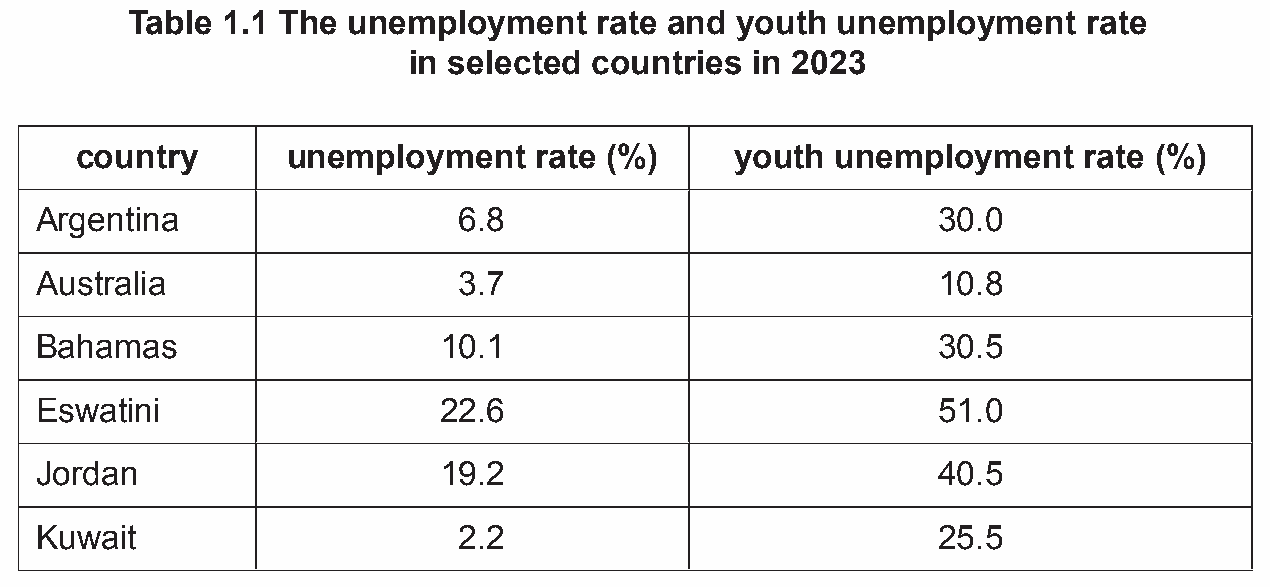
Kuwait fact file 2023 labour force 2.4m gross domestic product (GDP) $160bn surplus on the current account of $64bn the balance of payments Kuwait, a country in the Middle East, has a relatively large current account surplus. Countries, including China, India and South Korea, buy oil and electrical equipment from Kuwait. These countries’ firms also pay to have ships insured in Kuwait and for financial advice from Kuwaiti banks. Products that are exported create employment and income. However, Kuwaiti exports are then not available to be consumed in Kuwait. Kuwait is a high-income country with a relatively long life expectancy. It has good quality education and healthcare. The price of a range of products is cheaper in Kuwait than in Europe and the United States. For example, in 2023, the price of jeans and monthly access to the internet were cheaper in Kuwait. These price differences may change in the future as a result of changes in indirect taxes. In recent years, there has been an increase in the number of Kuwaiti workers employed in the country’s high-technology industries. Kuwait had a low unemployment rate in 2023, but a relatively high youth unemployment rate. Table 1.1 shows the unemployment rate and the youth unemployment rate (15 –24 year olds) in selected countries in 2023. Table 1.1 The unemployment rate and youth unemployment rate in selected countries in 2023 country unemployment rate (%) youth unemployment rate (%) Argentina 6.8 30.0 Australia 3.7 10.8 Bahamas 10.1 30.5 Eswatini 22.6 51.0 Jordan 19.2 40.5 Kuwait 2.2 25.5 The Kuwaiti Government aims to reduce youth unemployment and to encourage an increase in the proportion of workers employed in the private sector. Whether workers will move from the public sector to the private sector will depend on, for example, wages, job security and working conditions in the two sectors. Infrastructure projects in Kuwait influence employment. One example is the construction of the Mubarak Al-Kabeer port on Boubyan Island, a very popular tourist area in Kuwait. It is hoped that the port will change the cost of sea transport and create many jobs for Kuwait’s young workers. However, some are concerned that the port may create noise, water and air pollution and have an impact on the wildlife on and around the island. There is also the possibility that the land could be put to better use.

Discuss whether or not a new port will benefit an economy.
Discuss whether or not a new port will benefit an An increase in imports can be awarded on either side as economy. described in the guidance below. Award up to 4 marks for logical reasons why it might, which Apply this example to all questions with the command may include: word DISCUSS
Seoul, the capital city of the Republic of Korea, is home to many large firms which have very high productivity levels. The Republic of Korea has grown rapidly due to advances in technology and successful supply-side policy measures. However, this rapid economic growth has led to some market failures.
---
Explain two examples of market failure that may occur in an economy.
Explain two examples of market failure that may occur One mark each for each of two reasons identified and one in an economy. mark for each of two reasons. Logical explanation which might include: Accept any relevant examples of market failure.
Everyone, including young and older workers, who lived on an island off Panama were relocated to the mainland in 2024. This occurred due to rising sea levels and repeated flooding, which the public good of sea defences could not prevent. People from some small island nations may need to move unless governments can reduce pollution which can cause rising sea levels. The effect on the living standards of those who move from countries with small populations to countries with large populations is uncertain.
---
Define ‘public good’.
Define ‘public good’. Accept, but do not expect:
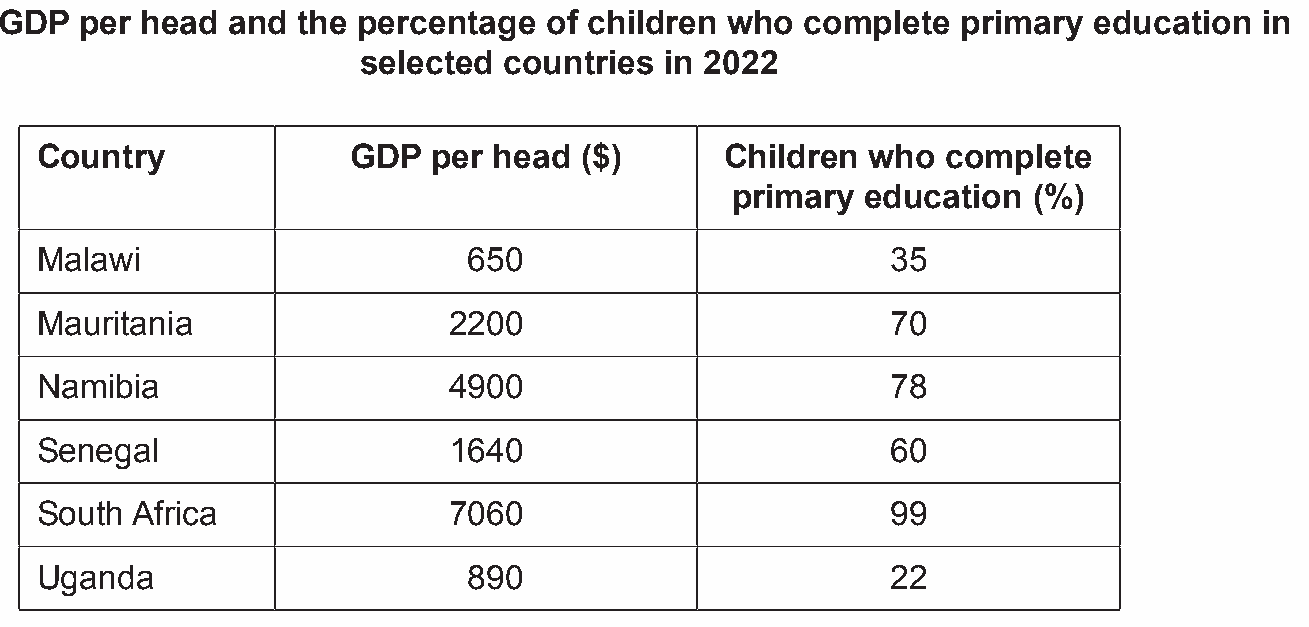
Malawi fact file 2022 Population 22m Percentage of population with access to electricity 15% Deficit on the current account of the balance of payments 12.9% of GDP Malawi is a low-income East African country. It is often affected by natural disasters including droughts, floods and storms. In January 2022, Malawi was hit by Storm Ana. This damaged agricultural crops, factories, forests and power stations. More than three-quarters of Malawi’s labour force are employed in agriculture. Two of the country’s main crops are tea and sugar. The quantity of tea offered for sale is affected by weather conditions, government subsidies and the price of fertilisers. The global market for sugar has been affected by health reports which identified the possible harmful effects of consuming too much sugar. Three of the priorities of the Malawian Government are to develop new industries, raise education standards and develop more sustainable sources of energy. The proportion of Malawian children who finish their primary education (5–11 years of age) is relatively low. Table 1.1 shows GDP per head and the percentage of children who complete primary education in selected countries in 2022. Table 1.1 GDP per head and the percentage of children who complete primary education in selected countries in 2022 Country GDP per head ($) Children who complete primary education (%) Malawi 650 35 Mauritania 2200 70 Namibia 4900 78 Senegal 1640 60 South Africa 7060 99 Uganda 890 22 Only a small proportion of Malawi’s population has access to electricity. Most households rely on wood and charcoal for cooking and heating. Using wood as a fuel contributes to the destruction of the country’s forests and reduces air quality. The country does, however, get 3000 hours of sunshine a year. This means it could develop solar energy. There would be an initial cost to install solar panels and to reduce the risk of storm damage. Solar energy plants (also known as solar farms) can take up a large area and create visual pollution. However, a successful solar energy industry could decrease Malawi’s imports of fuel and might affect its exchange rate. Malawi’s foreign exchange rate fell in 2022. The country’s currency, the kwacha, bought fewer US dollars. This depreciation affected Malawi’s current account of the balance of payment, its inflation rate and its economic growth rate. Some economists suggested that the Malawian Government should stop the kwacha falling further in value.

Discuss whether or not Malawi should develop a solar energy industry.
Award up to 4 marks for logical reasons why it might not, which may include:
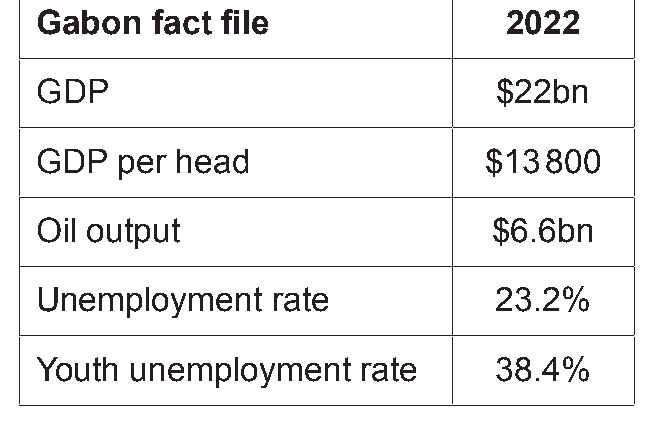
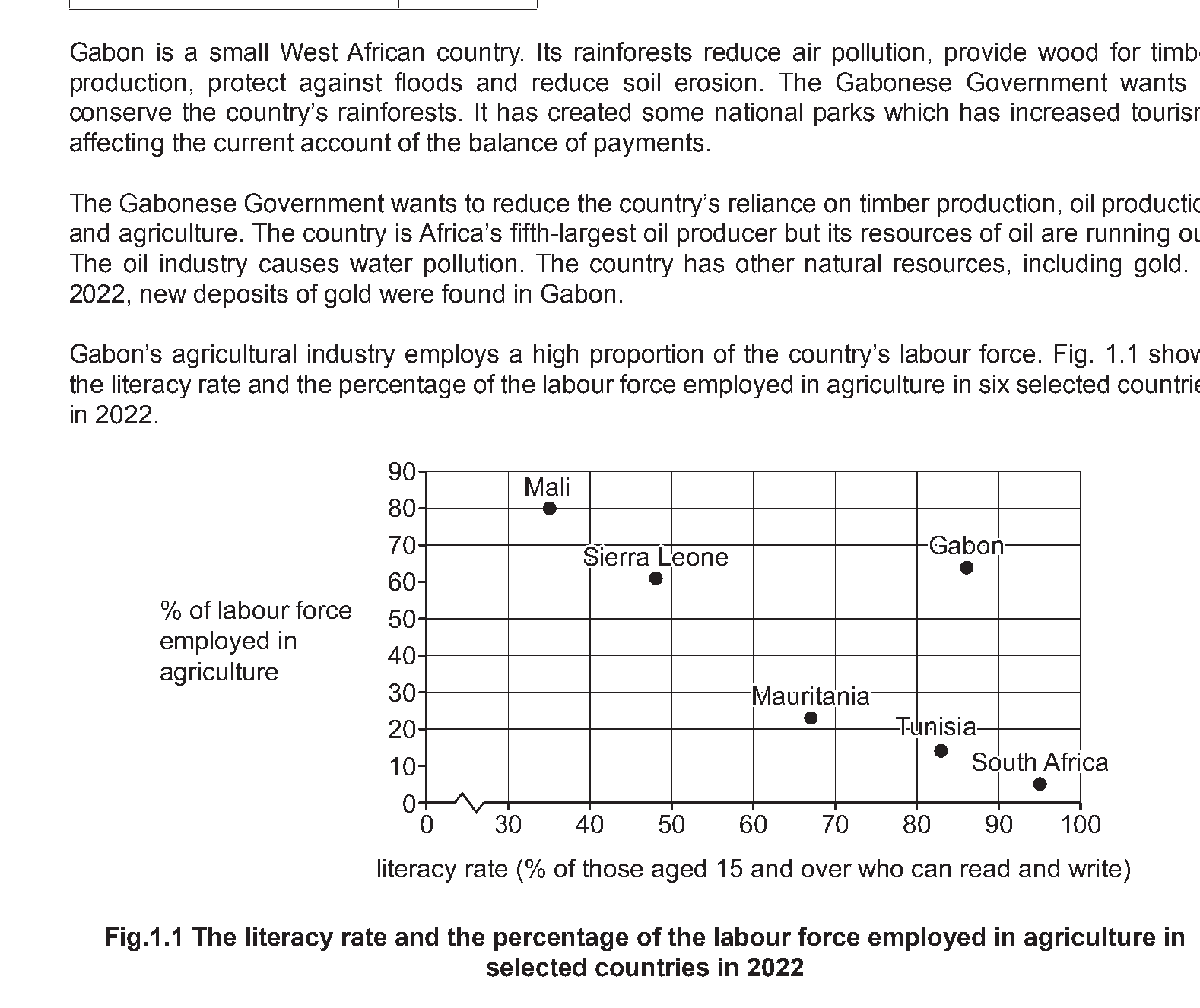
Gabon fact file 2022 GDP $22bn GDP per head $13 800 Oil output $6.6bn Unemployment rate 23.2% Youth unemployment rate 38.4% Gabon is a small West African country. Its rainforests reduce air pollution, provide wood for timber production, protect against floods and reduce soil erosion. The Gabonese Government wants to conserve the country’s rainforests. It has created some national parks which has increased tourism, affecting the current account of the balance of payments. The Gabonese Government wants to reduce the country’s reliance on timber production, oil production and agriculture. The country is Africa’s fifth-largest oil producer but its resources of oil are running out. The oil industry causes water pollution. The country has other natural resources, including gold. In 2022, new deposits of gold were found in Gabon. Gabon’s agricultural industry employs a high proportion of the country’s labour force. Fig. 1.1 shows the literacy rate and the percentage of the labour force employed in agriculture in six selected countries in 2022. 70 Sierra Leone Gabon % of labour force 50 employed in agriculture 30 Mauritania 20 Tunisia 10 South Africa 0 30 40 50 60 70 80 90 100 literacy rate (% of those aged 15 and over who can read and write) Fig.1.1 The literacy rate and the percentage of the labour force employed in agriculture in selected countries in 2022 In recent years, Gabon has experienced a high rate of unemployment among 15–24 year olds. High rates of youth unemployment can result in young people not gaining the skills and experience needed to achieve high productivity. It can also have a harmful effect on their confidence. Some governments pay private sector firms to give work experience to unemployed young people. The quality of this experience can vary. The Gabonese Government wants to develop its textile industry, encouraging firms to grow in size. The output of the industry will be affected not only by possible government support but also by its use of technology and specialisation of workers.
Identify two external benefits of rainforests.
Identify two external benefits of rainforests. If more than two benefits given, consider the first three. Two from:
St. Kitts and Nevis fact file 2022 Population 54 800 GDP per head $27 000 Government spending $310m Tax revenue $292m Unemployment rate 5.1% Inflation rate 2.4% Current account balance of the balance of payments –$56m St. Kitts and Nevis is a small, two-island country in the Caribbean. The country’s three main industries are tourism, financial services and agriculture. Tourists are attracted by the country’s beaches, coral reefs, forts, rainforests and shipwrecks. However, if rainforests continue to be cut down and soil erosion continues to pollute the coral reefs, killing off marine life, tourism may be discouraged. The St. Kitts and Nevis Government is also concerned that the social costs of tourism exceed the private costs. St. Kitts and Nevis’s financial services include a growing banking sector. Among the country’s commercial banks are a few foreign multinational companies (MNCs). These MNCs are attracted by the country’s relatively high incomes, the absence of personal income tax and a relatively high literacy rate. Some of the country’s main agricultural products are carrots, onions, peanuts and sweet potatoes. In 2017, the St. Kitts and Nevis Government introduced a training scheme to raise the productivity of onion farmers. Other important industries in St Kitts and Nevis include healthcare and fishing. Table 1.1 shows healthcare spending as a percentage of GDP and life expectancy in six selected countries in 2022. Table 1.1 Healthcare spending as a percentage of GDP and life expectancy in selected countries in 2022 Country Healthcare spending as Life expectancy (years) a % of GDP Canada 12.9 84 Egypt 4.5 75 Haiti 3.3 65 Monaco 1.9 90 St. Kitts and Nevis 5.4 77 Sweden 11.5 83 The small size of St. Kitts and Nevis’s fishing industry means that it imports large quantities of fish. The country’s fishing boats are small and some lack up-to-date equipment. A larger fishing industry, with bigger boats, may bring a number of benefits to the country. Changes in the structure and performance of industries in St. Kitts and Nevis may alter the country’s price level. Between 2018 and 2020, the country experienced deflation. This affected people’s purchasing power, saving and debts. It also affected the country’s exports and firms’ investment decisions.

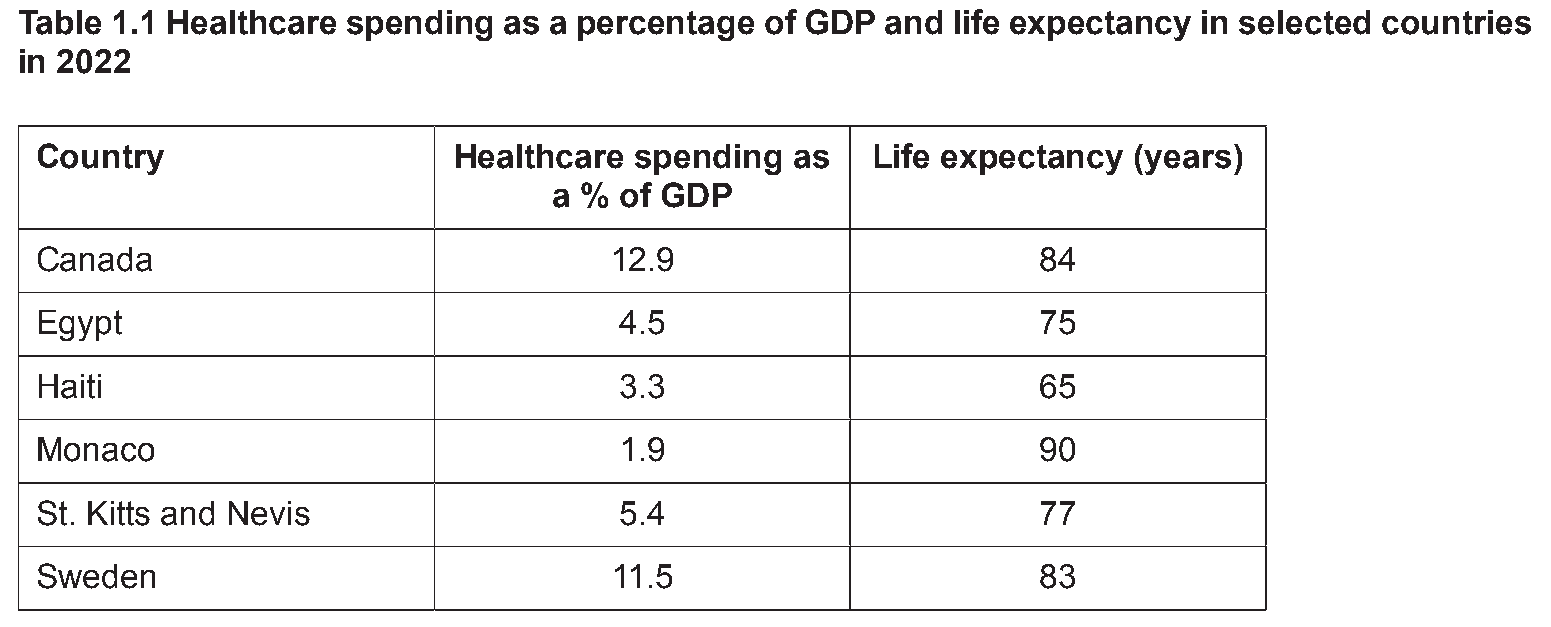
Explain how tourism causes external costs in St. Kitts and Nevis.
Explain how tourism causes external costs in St. Kitts One mark for explanation of external costs. and Nevis. One mark for example based on tourism.
In 2022, Paraguay’s production possibility curve (PPC) shifted to the right. Paraguay has a mixed economic system. Its government provides merit goods and public goods. The country’s private sector is a major producer of shampoo. The firms in the shampoo industry make use of division of labour. There are several firms in the industry, but the number is declining. There is a possibility that soon there may be just one firm in the industry.
Explain, with an example of each, the difference between a merit good and a public good.
Explain, with an example of each, the difference One mark for an explanation of a merit good and one mark between a merit good and a public good. for an example of a merit good. One mark for an explanation of a public good and one mark Logical explanation which might include: for an example of a public good. A merit good is under-consumed / underproduced / Accept but do not expect reference to non-rejectable / zero consumers do not appreciate its full value / has external cost of producing an extra unit for a public good. benefits / can be produced by the private sector / can be produced by the private sector and the public sector / is a Allow public park. private good / is rival and excludable (1) e.g. education / healthcare / fruit (1). No mark for roads unless qualified by e.g. uncrowded roads A public good would not be produced by the private sector / with many entry and exit points. is (usually) supplied / produced by the government / funded by the government (1) non-excludable / non-rival (1) e.g. street lighting / defence / flood control (1).
South Korea makes use of both economic goods and free goods. Its output includes products with both elastic and inelastic supply. The country is building the world’s first floating city, estimated to cost $180m. This is to cope with rising sea levels caused by climate change. Governments take a number of measures to reduce greenhouse gases which contribute to climate change, including banning the burning of wood to heat homes.
Discuss whether or not a government should ban the burning of wood to heat homes.
Discuss whether or not a government should ban the burning of Level Description Marks wood to heat homes. In assessing each answer, use the table opposite. 3 A reasoned discussion 6–8 which accurately examines both sides of the Why it should: economic argument,
🔒 Unlock every Market failure question from 2019–2024
All 79 come with their mark schemes, answers and case studies, and appear in the practice tool above once you’re signed in. It’s free.
Questions and mark schemes are from past Cambridge papers and are reproduced for revision. Topical Vault is an independent revision resource, not affiliated with or endorsed by Cambridge Assessment International Education.
Each topic opens this practice tool with only that topic’s questions, plus how often it comes up and every question on it in one list. Revision notes for IGCSE Economics →