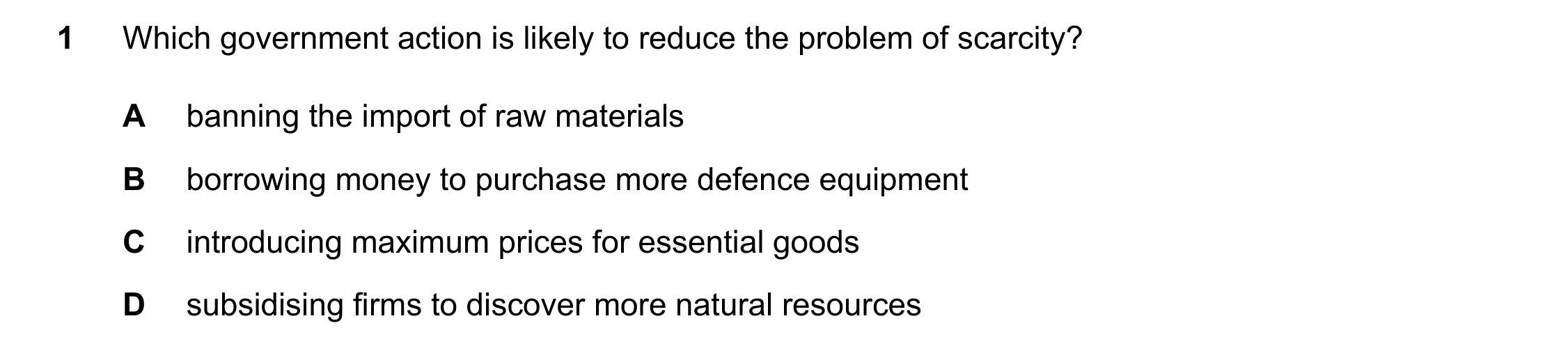
Question 1June 20260455/111 mark
Show answer
DCorrect answer
Cambridge 0455, Paper 1 & 2. 2,888 questions, 2019 to 2026.
Paper 1 multiple-choice questions and Paper 2 structured questions, from the original Cambridge material. Paper 2 case studies and mark schemes are reproduced as extracted text, with data tables and charts kept as cropped images rather than retyped. A question tagged under a second chapter shows that as a cross-link; it is only filed once, under its primary chapter.
Land, labour, capital and enterprise: what each factor is, what it earns, and what affects its quantity, quality and mobility.
New to Factors of production, or finding these questions hard?
Read the notes first: the key ideas, diagrams and formulas, and the mistakes examiners see most, in about 12 minutes.
141 past paper questions on this topic since 2019, across 32 exam sessions.
| Year | Paper 1 | Paper 2 | Total | Chart |
|---|---|---|---|---|
| 2026 | 6 | 6 | 12 | |
| 2025 | 10 | 11 | 21 | |
| 2024 | 8 | 9 | 17 | |
| 2023 | 6 | 7 | 13 | |
| 2022 | 12 | 6 | 18 | |
| 2021 | 6 | 9 | 15 | |
| 2020 | 17 | 7 | 24 | |
| 2019 | 12 | 9 | 21 |
The whole topic on one page, with answers and mark schemes. Printing this page prints just this list.
DCorrect answer

BCorrect answer

ACorrect answer

BCorrect answer
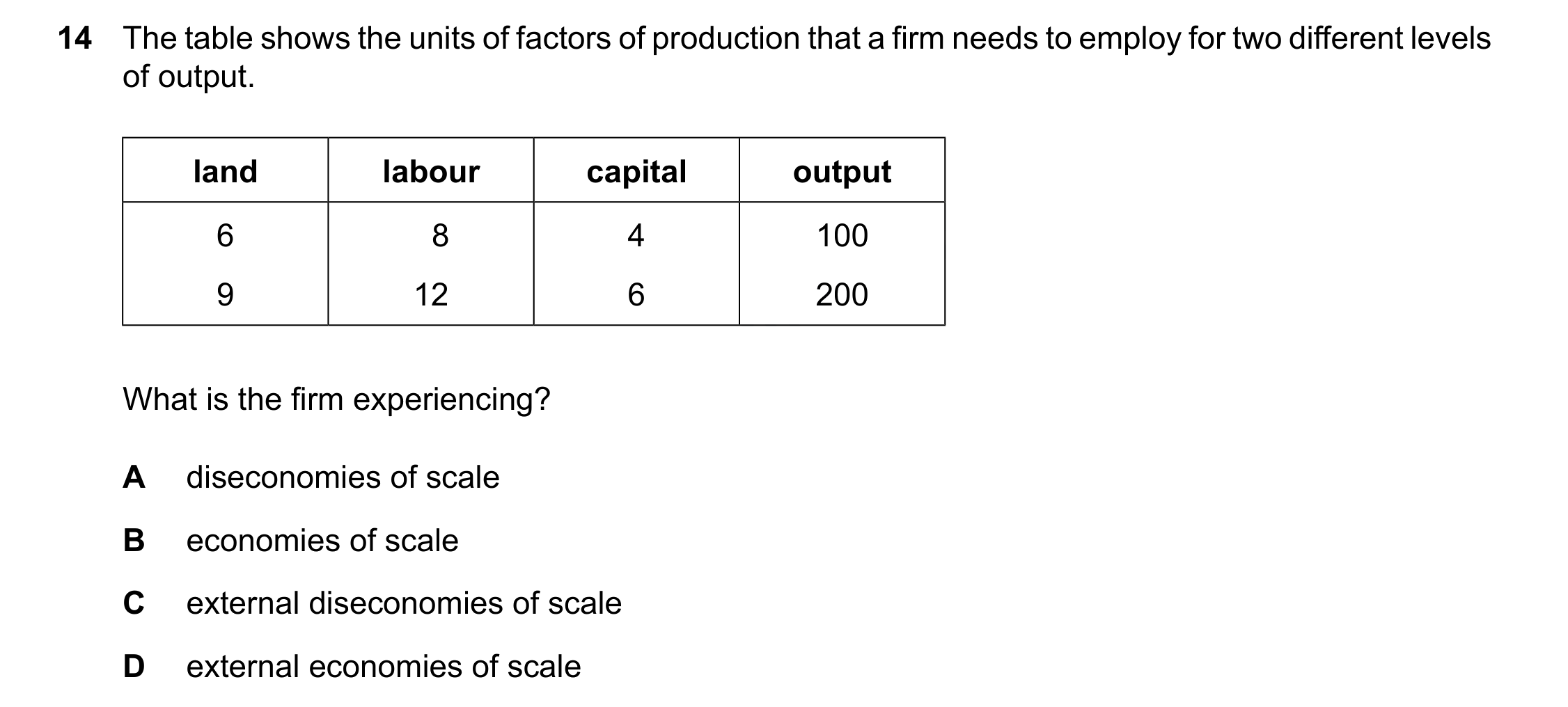
BCorrect answer
A group of workers in a firm joins a trade union. What would the union be expected to do?
BCorrect answer
In which occupations do wages tend to be lowest?
BCorrect answer
What is least likely to increase the geographical mobility of labour?
DCorrect answer
What is likely to increase the occupational mobility of labour?
BCorrect answer
Sonia owns a takeaway food delivery service. She decides to expand the firm, buying more vans and hiring additional drivers. Which factors of production were changed?
ACorrect answer
A firm chooses to become more capital-intensive. What is least likely to have increased?
ACorrect answer
A university rejects 2000 qualified applicants who wish to study there. Which factor of production could have caused the university to make this decision?
BCorrect answer
What is not a factor of production?
ACorrect answer
What is classed as the factor of production land?
DCorrect answer
What is a characteristic of a market economic system?
DCorrect answer
Which action by employers is most likely to reduce long-term economic growth?
DCorrect answer
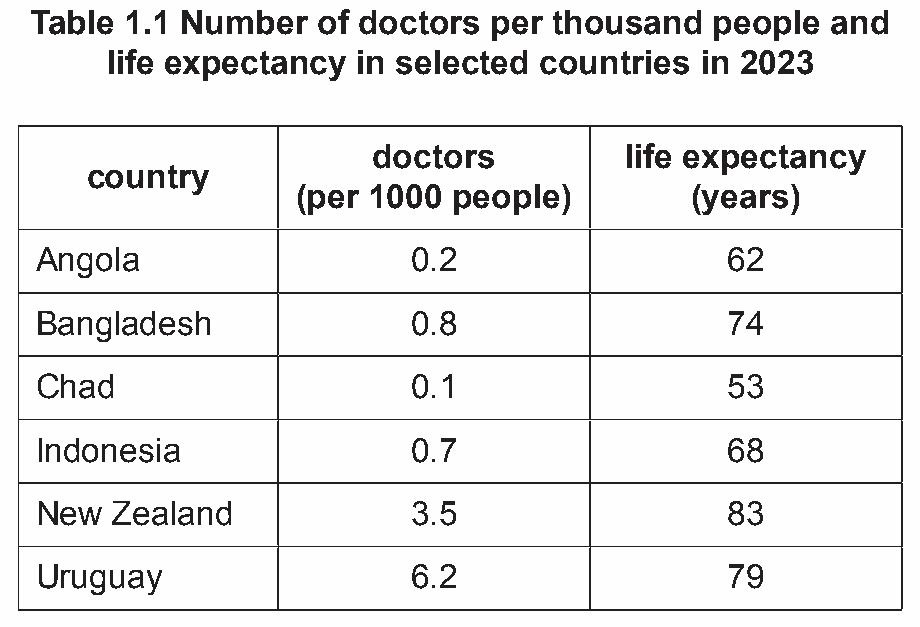
Uruguay fact file 2023 population 3.5m gross domestic product (GDP) $77.0bn government revenue $10.7bn government budget deficit $2.5bn In 2023, the Uruguayan Government raised the retirement age from 60 to 65. There are concerns about the current high government spending on pensions and it is expected that life expectancy in the country will continue to rise. A higher retirement age will have an impact on the country’s labour force, with most workers employed in the tertiary sector. The average age of Uruguay’s population is increasing due to a fall in the birth rate and emigration of young workers. Many Uruguayan workers emigrate to the United States (US) where wages are higher. However, income inequality is considerably lower in Uruguay than in the US. The tax system in Uruguay is more progressive than in the US, and the Uruguayan Government spends a higher percentage of GDP on education and healthcare. In both Uruguay and the US, there is increasing demand for swimming pools. These use a large amount of water. Demand for some luxury items, such as swimming pools, is increasing in Uruguay. Demand for healthcare is also rising which is likely to increase the number of doctors in Uruguay. Table 1.1 shows the number of doctors per thousand people and life expectancy in selected countries. Table 1.1 Number of doctors per thousand people and life expectancy in selected countries in 2023 doctors life expectancy country (per 1000 people) (years) Angola 0.2 62 Bangladesh 0.8 74 Chad 0.1 53 Indonesia 0.7 68 New Zealand 3.5 83 Uruguay 6.2 79 In 2023, Uruguay experienced its lowest inflation rate for eighteen years. This low level of inflation encouraged investment in the country. It changed the international competitiveness of the country’s products against its main trading partners, which had higher inflation rates. It also had an impact on the cost of debt in the country and firms’ willingness to increase their output. Prices change at different rates in different markets. In several markets in Uruguay, there is only one firm. All of Uruguay’s monopolies can set the price of the products they sell. Having monopoly power can also affect the firm’s average total cost and the quality of what they produce.
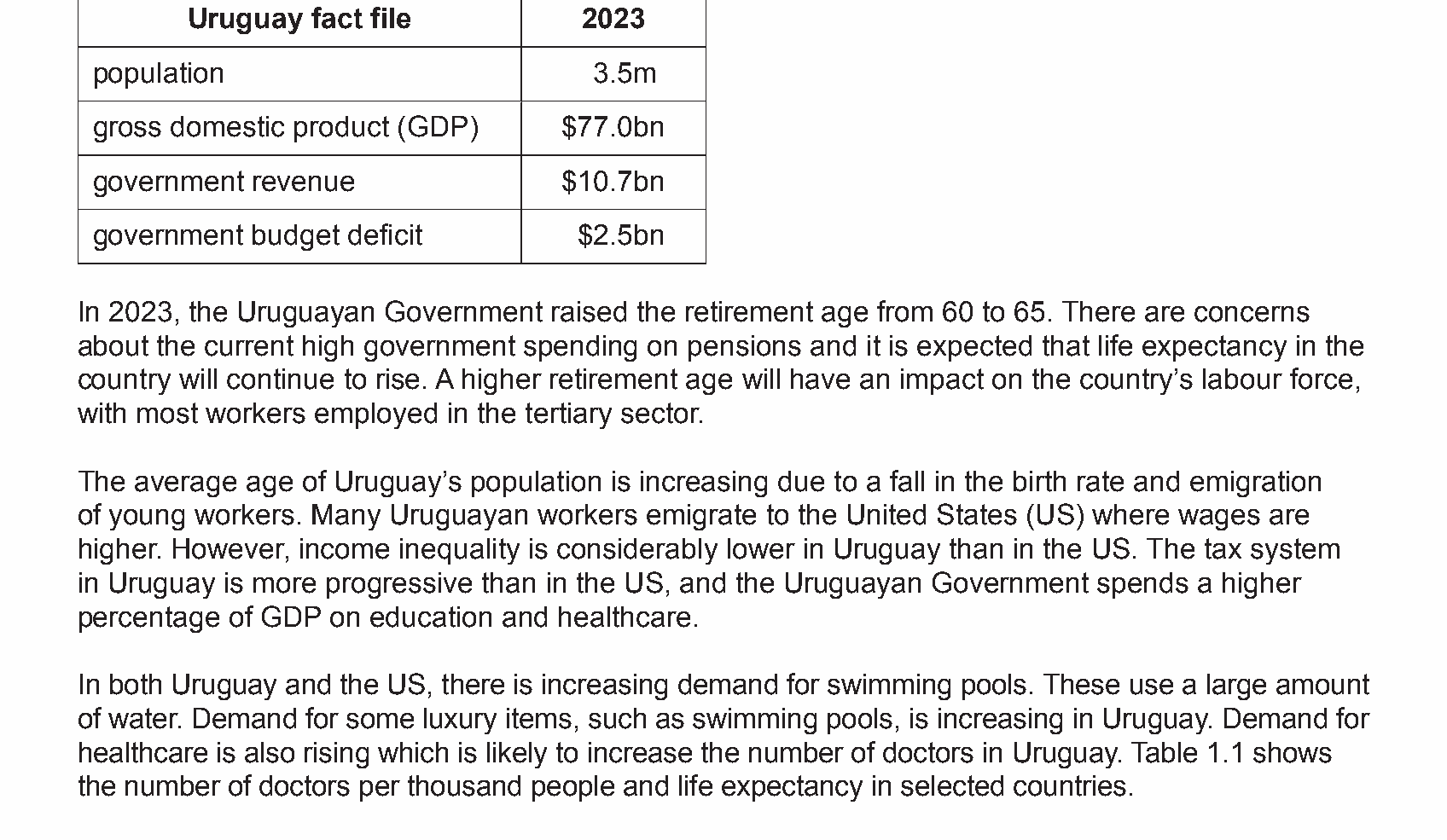
Explain why some Uruguayan workers emigrate to the US.
Explain why some Uruguayan workers emigrate to the USA. Higher wages / income (1) increase living standards / increase quality of life / increase purchasing power / reduce poverty / send remittances back to Uruguay / less progressive tax in the US (1).
Temperatures continue to rise throughout the world. This affects the health of those who work outside and their productivity. Higher temperatures can also reduce the hours they work and their incomes. However, there are benefits for some entrepreneurs and their firms. For example, demand for air conditioners continues to increase. Higher output of a range of products can affect economic growth and poverty.
---
Identify two causes of an increase in the quality of enterprise.
Identify two causes of an increase in the quality of If more than two causes are given, consider the first three. enterprise.
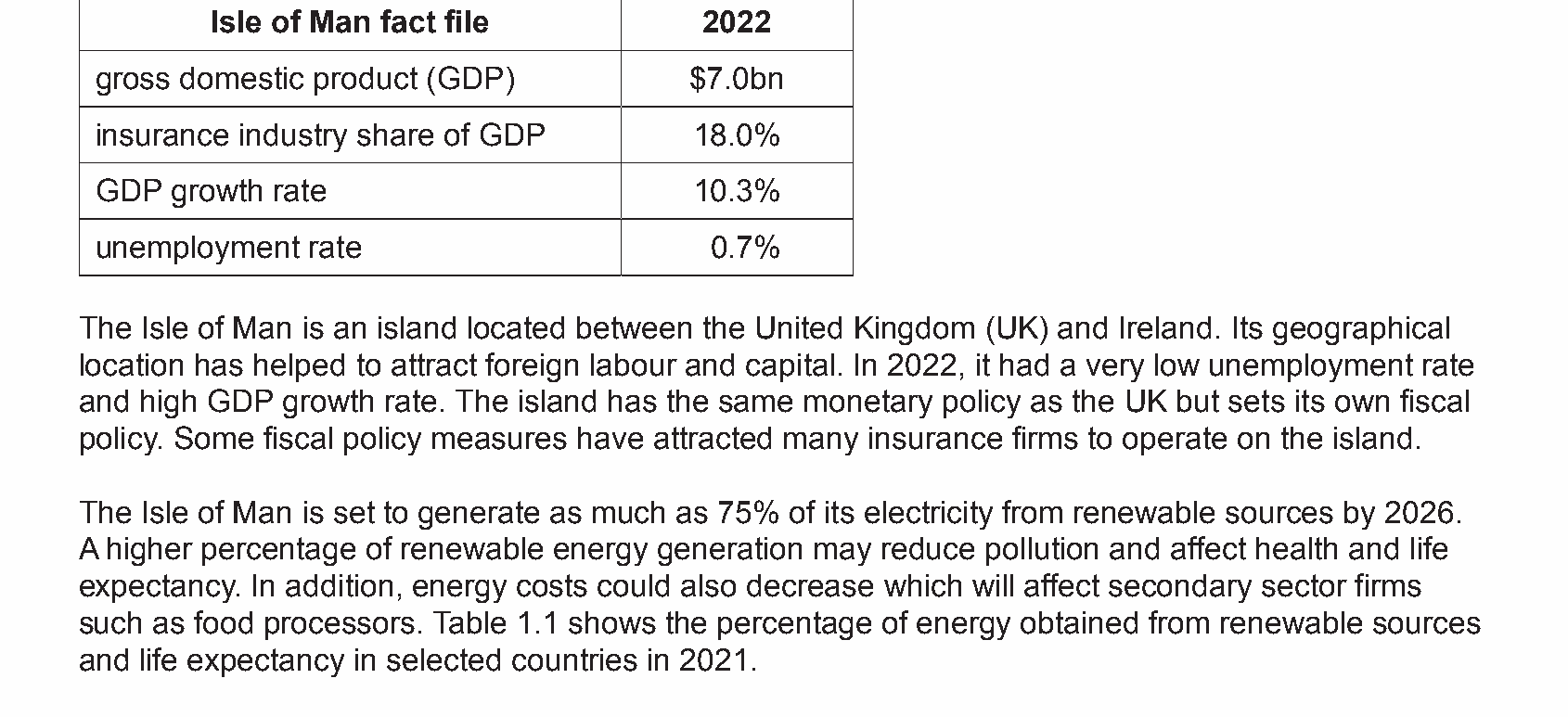
Isle of Man fact file 2022 gross domestic product (GDP) $7.0bn insurance industry share of GDP 18.0% GDP growth rate 10.3% unemployment rate 0.7% The Isle of Man is an island located between the United Kingdom (UK) and Ireland. Its geographical location has helped to attract foreign labour and capital. In 2022, it had a very low unemployment rate and high GDP growth rate. The island has the same monetary policy as the UK but sets its own fiscal policy. Some fiscal policy measures have attracted many insurance firms to operate on the island. The Isle of Man is set to generate as much as 75% of its electricity from renewable sources by 2026. A higher percentage of renewable energy generation may reduce pollution and affect health and life expectancy. In addition, energy costs could also decrease which will affect secondary sector firms such as food processors. Table 1.1 shows the percentage of energy obtained from renewable sources and life expectancy in selected countries in 2021. Table 1.1 Percentage of energy obtained from renewable sources and life expectancy in 2021 country percentage of energy life expectancy from renewable sources (years) Bangladesh 1.6% 74.3 Timor-Leste 0.4% 69.5 Iceland 100.0% 83.0 Isle of Man 5.0% 80.5 Luxembourg 85.0% 82.8 Oman 1.9% 72.5 Goods are transported to and from the island by air or sea. The government has increased spending to improve the airport and move the economy’s production possibility curve (PPC). The increased spending was used to increase the number of employees and improve the airport building. This has affected the number of flight cancellations. However, some airport users are still not satisfied. Some industries are also dissatisfied as the government is not funding projects which affect these other industries directly. Firms deciding whether to invest in the Isle of Man consider several influences including the level of demand and labour availability. The market for goods and services on the island is very small. However, there is free trade with neighbouring countries. Foreign workers are attracted by the low cost of living in the Isle of Man. However, some workers stay for only a short period of time before moving to jobs elsewhere.

Identify two factors of production that have moved to the Isle of Man.
Identify two factors of production that have moved to the Isle of Man.
Discuss whether or not companies should invest in the Isle of Man.
Discuss whether or not companies should invest in the Isle of Man. Award up to 4 marks for logical reasons why they should invest, which may include:
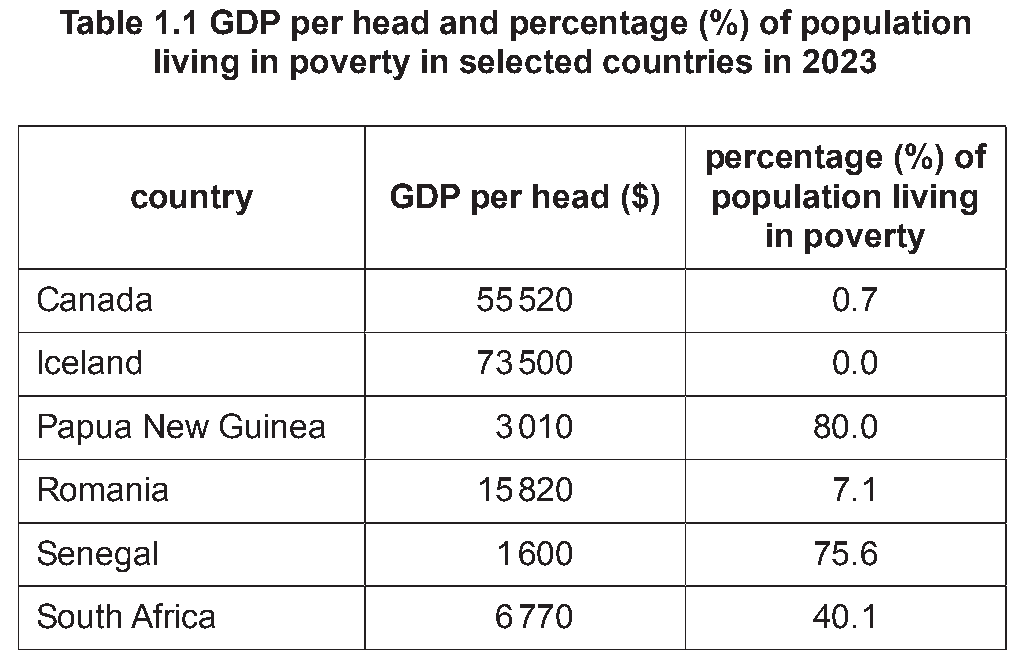
Senegal fact file 2023 population 19m gross domestic product (GDP) $31bn workers’ remittances as a percentage of GDP 9% Human Development Index (HDI) value 0.517 Senegal, a north‑east African country, has some of its workers employed in other countries. These workers send a percentage of their wages home to relatives. This money is known as workers’ remittances. Due to their relatively low incomes, most Senegalese households spend all of these remittances. However, some households do not spend all of the money they receive when interest rates are high or when confidence is low. A relatively high proportion of workers in Senegal are employed in agriculture. The crops grown in Senegal are affected by extreme heat and droughts. These weather conditions are one reason why the country grows the crop, sorghum, which does not need much water during its growth. Sorghum is low in calories and so can help people who consume it to lose weight. Senegal is a net exporter of sorghum. It is also the largest African exporter of rice after Nigeria. Greater use of capital equipment in the production of both sorghum and rice could affect productivity. This may reduce the deficit on the current account of Senegal’s balance of payments. The Senegalese Government wants to develop the country’s secondary and tertiary sectors to improve the country’s economic performance. It also expects that this will reduce poverty as measured by those living on $6.85 or less a day. Table 1.1 shows GDP per head and the percentage (%) of population living in poverty in selected countries. Table 1.1 GDP per head and percentage (%) of population living in poverty in selected countries in 2023 percentage (%) of country GDP per head ($) population living in poverty Canada 55 520 0.7 Iceland 73 500 0.0 Papua New Guinea 3 010 80.0 Romania 15 820 7.1 Senegal 1 600 75.6 South Africa 6 770 40.1 A related aim of the Senegalese Government is to increase the country’s HDI value. Governments can use fiscal policy measures to improve the three components of their HDI value, including life expectancy. Changes in fiscal policy can also affect the markets for Senegalese products including gold. Among the influences on the price elasticity of demand for gold are changes in income, the availability of substitutes and the extent to which gold is seen as a luxury.

Explain one cause of a decrease in the quality of land used in agriculture in Senegal.
Explain one cause of a decrease in the quality of land used in One mark for a reason identified and one mark for agriculture in Senegal. an explanation. Droughts / extreme heat/weather (1) reduce/degrade the fertility of land If more than 1 cause is given, consider the first 2. / kill off crops / reduced yield (1).
Everyone, including young and older workers, who lived on an island off Panama were relocated to the mainland in 2024. This occurred due to rising sea levels and repeated flooding, which the public good of sea defences could not prevent. People from some small island nations may need to move unless governments can reduce pollution which can cause rising sea levels. The effect on the living standards of those who move from countries with small populations to countries with large populations is uncertain.
---
Explain two reasons why young workers may be more mobile than older workers.
Explain two reasons why young workers may be more mobile One mark each for each of two reasons identified than older workers. and one mark for each of two explanations. Logical explanation which might include: If more than 2 reasons are given, consider the first 3.
Lanzarote, a Spanish island, was once an area with very high rates of poverty. However, the rise of tourism has greatly reduced unemployment. The government is trying to attract more workers to the island by using non‑wage factors. Lanzarote’s low taxes also attract workers to the island. Mobility of labour in the island’s economy has also increased.
Analyse the influences on the mobility of labour.
Analyse the influences on the mobility of labour. Coherent analysis which might include:
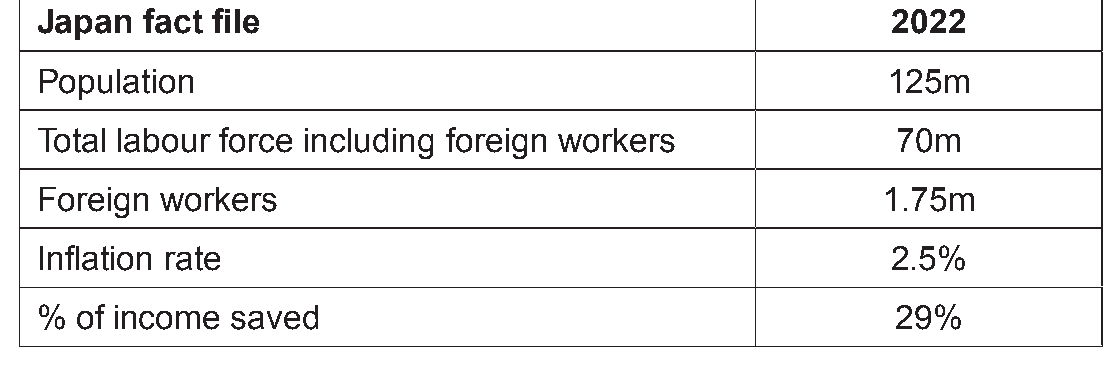
Japan fact file 2022 Population 125m Total labour force including foreign workers 70m Foreign workers 1.75m Inflation rate 2.5% % of income saved 29% Japan has a high average age of population and a varied economic performance. It has a low birth rate, low inflation rate, good healthcare, high life expectancy and low unemployment rate. Fewer Japanese people enter the labour force each year. It is predicted that Japan’s labour force will fall by 10 million by 2040. Many young Japanese people emigrate to Australia, Canada and the US in search of higher wages. However, Japan now experiences net immigration although foreign workers are currently only a small proportion of Japan’s labour force. To achieve an annual economic growth rate of 1.2%, it has been estimated that the number of foreign workers would have to increase to 7 million by 2040. Some foreign workers are discouraged from working in Japan due to the requirement to pass a Japanese language test. Only the most skilled are allowed to stay for more than 5 years and to bring their families with them. Many Japanese industries are affected by labour shortages and the country’s decline in population. For example, the fall in population has affected the quantity of furniture traded. It has also influenced the country’s air transport industry. Air travel is the most important method of transport in Japan for foreign travel and long-distance internal travel. Japan’s air passenger numbers follow a similar pattern to global air passenger numbers. Table 1.1 shows global GDP per head and global air passenger numbers between 2016 and 2022. Table 1.1 Global GDP per head and global air passenger numbers 2016 – 2022 Year Global GDP per head ($) Global air passenger numbers (billions) 2016 10 217 3.8 2017 10 745 4.1 2018 11 289 4.4 2019 11 356 4.5 2020 10 884 3.3 2021 12 350 2.2 2022 13 200 3.7 Demand for goods and services, including air travel, is influenced by how much people save. Japanese people save a relatively high proportion of their income. This has affected the country’s inflation rate, current account balance of the balance of payments and its economic growth rate. Japan’s macroeconomic performance is also influenced by the mobility of its labour force. There are several reasons why the mobility of Japan’s labour force may change in the future. These include its ageing labour force and possible changes in education and training, house prices and the quality and price of transport.

Discuss whether or not labour mobility in Japan is likely to increase in the future.
Discuss whether or not labour mobility in Japan is likely Reference to occupational and geographical mobility can be to increase in the future. credited on either side of the argument, but only once. Award up to 4 marks for logical reasons why it might, which Reference to falling house prices or improved transport must may include: be linked to improved mobility for credit and vice versa.
Some markets in Belgium are in equilibrium. The country produces a wide range of goods and services with different degrees of price elasticity of demand. The Belgian Government wants the economy to move to a production possibility point beyond its current production possibility curve (PPC). Belgium’s scientific industry is one industry which is doing well. Workers in this industry are highly specialised.
Discuss whether or not firms benefit from their workers undertaking training.
Discuss whether or not firms benefit from their workers Level Description Marks undertaking training. 3 A reasoned discussion which accurately 6–8 In assessing each answer, use the table opposite. examines both sides of the economic argument, making use of economic Why they might: information and clear and logical
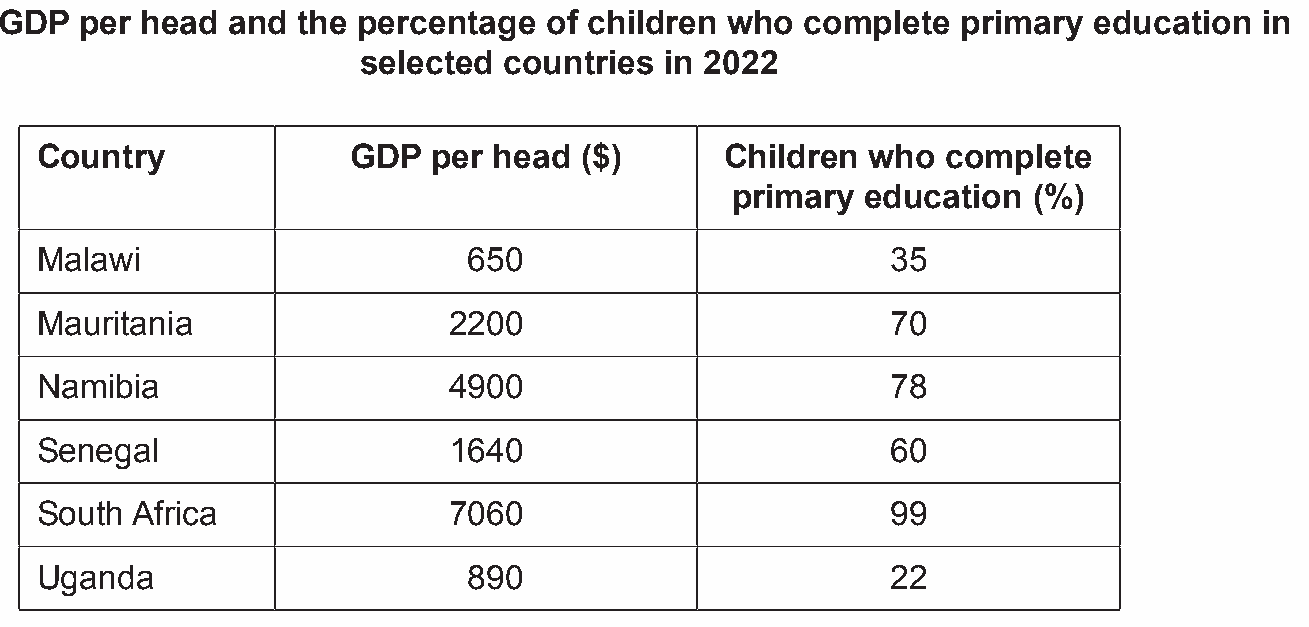
Malawi fact file 2022 Population 22m Percentage of population with access to electricity 15% Deficit on the current account of the balance of payments 12.9% of GDP Malawi is a low-income East African country. It is often affected by natural disasters including droughts, floods and storms. In January 2022, Malawi was hit by Storm Ana. This damaged agricultural crops, factories, forests and power stations. More than three-quarters of Malawi’s labour force are employed in agriculture. Two of the country’s main crops are tea and sugar. The quantity of tea offered for sale is affected by weather conditions, government subsidies and the price of fertilisers. The global market for sugar has been affected by health reports which identified the possible harmful effects of consuming too much sugar. Three of the priorities of the Malawian Government are to develop new industries, raise education standards and develop more sustainable sources of energy. The proportion of Malawian children who finish their primary education (5–11 years of age) is relatively low. Table 1.1 shows GDP per head and the percentage of children who complete primary education in selected countries in 2022. Table 1.1 GDP per head and the percentage of children who complete primary education in selected countries in 2022 Country GDP per head ($) Children who complete primary education (%) Malawi 650 35 Mauritania 2200 70 Namibia 4900 78 Senegal 1640 60 South Africa 7060 99 Uganda 890 22 Only a small proportion of Malawi’s population has access to electricity. Most households rely on wood and charcoal for cooking and heating. Using wood as a fuel contributes to the destruction of the country’s forests and reduces air quality. The country does, however, get 3000 hours of sunshine a year. This means it could develop solar energy. There would be an initial cost to install solar panels and to reduce the risk of storm damage. Solar energy plants (also known as solar farms) can take up a large area and create visual pollution. However, a successful solar energy industry could decrease Malawi’s imports of fuel and might affect its exchange rate. Malawi’s foreign exchange rate fell in 2022. The country’s currency, the kwacha, bought fewer US dollars. This depreciation affected Malawi’s current account of the balance of payment, its inflation rate and its economic growth rate. Some economists suggested that the Malawian Government should stop the kwacha falling further in value.

Identify two capital goods used in Malawi.
Identify two capital goods used in Malawi. If more than two capital goods are given, consider the first three. Two from: Factories (1) power stations (1) solar panels (1) electricity (1) fertilisers (1).
In recent years, the quantity of Latvia’s factors of production has changed. Since 2008, its capital has increased and its land has not changed significantly, but its labour force and its enterprise have decreased. Enterprise and conditions of supply can affect firms’ prices. In 2022, the Latvian Government increased the country’s national minimum wage (NMW). Its NMW did, however, remain one of the lowest in the European Union.
Identify the rewards to capital and land.
Identify the rewards to capital and land. If just names the two rewards, they can be in any order.
Explain two causes of a decrease in enterprise in an economy.
Explain two causes of a decrease in enterprise in an One mark each for each of two causes identified and one economy. mark each for each of two explanations. Logical explanation which might include: If more than two causes given, consider the first three.
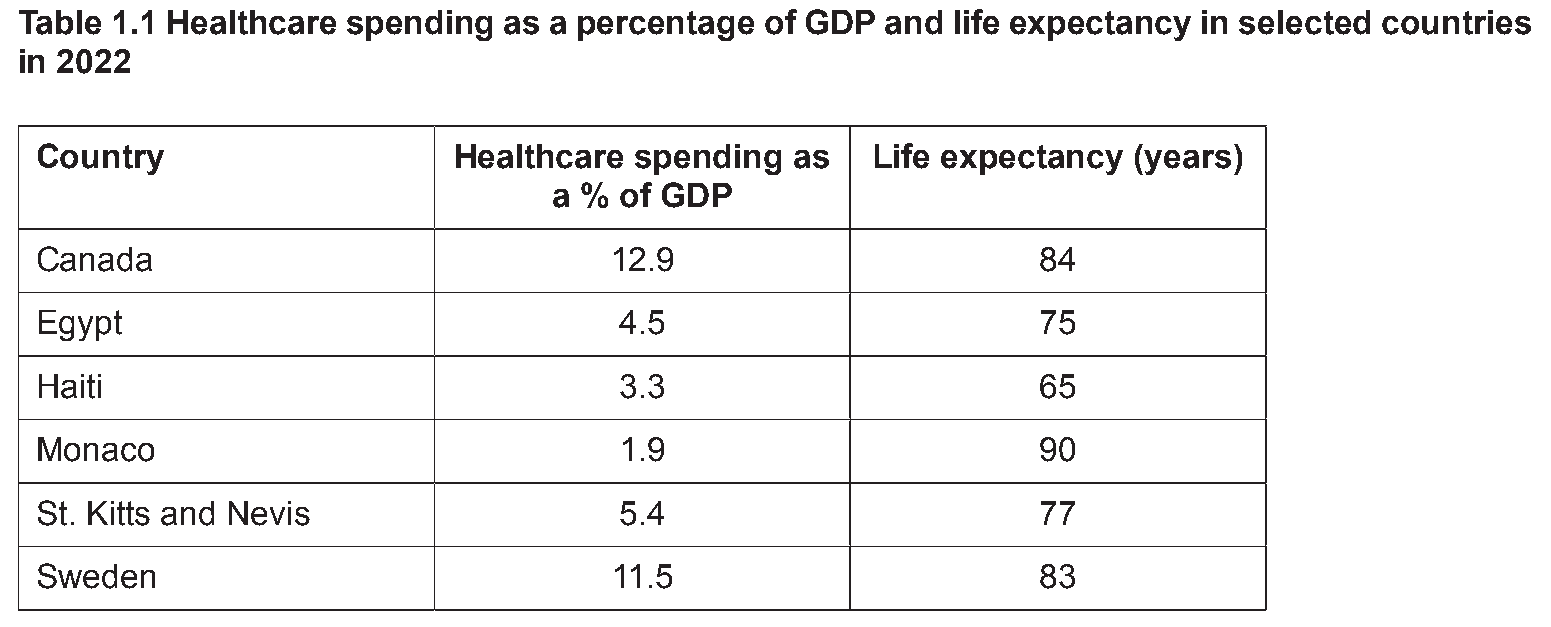
St. Kitts and Nevis fact file 2022 Population 54 800 GDP per head $27 000 Government spending $310m Tax revenue $292m Unemployment rate 5.1% Inflation rate 2.4% Current account balance of the balance of payments –$56m St. Kitts and Nevis is a small, two-island country in the Caribbean. The country’s three main industries are tourism, financial services and agriculture. Tourists are attracted by the country’s beaches, coral reefs, forts, rainforests and shipwrecks. However, if rainforests continue to be cut down and soil erosion continues to pollute the coral reefs, killing off marine life, tourism may be discouraged. The St. Kitts and Nevis Government is also concerned that the social costs of tourism exceed the private costs. St. Kitts and Nevis’s financial services include a growing banking sector. Among the country’s commercial banks are a few foreign multinational companies (MNCs). These MNCs are attracted by the country’s relatively high incomes, the absence of personal income tax and a relatively high literacy rate. Some of the country’s main agricultural products are carrots, onions, peanuts and sweet potatoes. In 2017, the St. Kitts and Nevis Government introduced a training scheme to raise the productivity of onion farmers. Other important industries in St Kitts and Nevis include healthcare and fishing. Table 1.1 shows healthcare spending as a percentage of GDP and life expectancy in six selected countries in 2022. Table 1.1 Healthcare spending as a percentage of GDP and life expectancy in selected countries in 2022 Country Healthcare spending as Life expectancy (years) a % of GDP Canada 12.9 84 Egypt 4.5 75 Haiti 3.3 65 Monaco 1.9 90 St. Kitts and Nevis 5.4 77 Sweden 11.5 83 The small size of St. Kitts and Nevis’s fishing industry means that it imports large quantities of fish. The country’s fishing boats are small and some lack up-to-date equipment. A larger fishing industry, with bigger boats, may bring a number of benefits to the country. Changes in the structure and performance of industries in St. Kitts and Nevis may alter the country’s price level. Between 2018 and 2020, the country experienced deflation. This affected people’s purchasing power, saving and debts. It also affected the country’s exports and firms’ investment decisions.

Identify two examples of the factor of production ‘land’ in St. Kitts and Nevis.
Identify two examples of the factor of production land in If more than two examples given, consider the first three. St. Kitts and Nevis. Two from: beaches (1), (coral) reefs (1), marine life / fish (1) rainforests (1) and soil (1).
Explain two reasons why a foreign bank may open a branch in St. Kitts and Nevis.
Explain two reasons why a foreign bank may open a One mark each for each of two reasons identified and one branch in St. Kitts and Nevis. mark each for each of two explanations. Logical explanation which might include: If more than two reasons given, consider the first three.
The world’s four largest accountancy firms experienced a decline in demand for their services at the start of 2023. One cause of this lower demand was a decline in mergers in other industries, including the chocolate industry. Three of the accountancy firms reduced the number of new workers they hired and the other accountancy firm announced job losses. The ability of workers to gain new jobs is influenced by their mobility.
Analyse the advantages of an increase in labour mobility.
Analyse the advantages of an increase in labour Reward but do not expect reference to reduce labour market mobility. failure. Coherent analysis which might include:
Estonia’s factors of production are employed in a range of industries including education. In 2022, the country experienced a shortage of teachers. The government increased teachers’ wages to attract workers from other industries. Two of Estonia’s other industries are building and clothing. Estonia’s clothing industry has firms of different sizes. Estonia’s firms were affected in 2022 by the government increasing the money supply.
Define factor of production.
Define factor of production. No marks for examples. A resource / input (1) used to produce goods and services / used in the production process (1).
Explain two reasons why building workers may not become teachers.
Explain two reasons why building workers may not become One mark each for each of two reasons teachers. identified and one mark each for each of two explanations. Logical explanation which might include: If more than two reasons given, consider the May lack skills (1) occupationally immobile (1). first three. May not have the necessary qualifications / may not have sufficient education / may lack training / may lack willingness or ability to undertake training (1). May be paid more as building workers (1) a more physically demanding / more dangerous job (1) enjoy a higher standard of living as building workers may be in more demand than teachers (1). May be geographically immobile (1) unable to move to where the teaching jobs are (1). May not like the working conditions experienced by teachers (1) e.g. may want flexible working hours / less stress (1). May be unaware of job vacancies (1) information failure (1). May lack job vacancies (1) demand for teachers may fall (1). May enjoy working outside / gain more job satisfaction from working as a builder (1) benefit of fresh air (1). Question Answer Marks Guidance
🔒 Unlock every Factors of production question from 2019–2024
All 108 come with their mark schemes, answers and case studies, and appear in the practice tool above once you’re signed in. It’s free.
Questions and mark schemes are from past Cambridge papers and are reproduced for revision. Topical Vault is an independent revision resource, not affiliated with or endorsed by Cambridge Assessment International Education.
Each topic opens this practice tool with only that topic’s questions, plus how often it comes up and every question on it in one list. Revision notes for IGCSE Economics →